


Virtual staging has become one of the most powerful tools in modern real estate photography. It allows photographers and agents to digitally furnish empty spaces, turning a plain room into a beautiful, market-ready home image. Instead of hauling furniture or setting up lighting for physical staging, professionals can now create realistic, furnished rooms using advanced photo editing software and 3D design tools.
According to the National Association of Realtors (2024), listings with professionally staged photos sell 73% faster and receive up to 20% higher offers than unstaged listings. For real estate photographers, mastering virtual staging has become essential to creating competitive marketing visuals.
Why Virtual Staging Works in Real Estate Photography
At its core, virtual staging works because it taps into emotional marketing. Buyers often struggle to imagine what an empty property will look like when furnished. By seeing the potential through staged images, they connect emotionally and envision themselves living there.
For photographers, virtual staging enhances their portfolio and helps clients reduce marketing costs. Compared to traditional staging, virtual staging can be 90% more affordable while maintaining equally strong visual impact. This makes it especially appealing for agents managing multiple listings.
Additionally, enhanced photo editing techniques allow editors to achieve natural lighting, realistic shadows, and lifelike textures. A well-staged and retouched image can increase online engagement by 40%, resulting in more clicks, longer viewing time, and ultimately, more inquiries.
>>> Read more: How Virtual Staging Transforms Real Estate Photography
Popular Virtual Staging Styles That Sell
The effectiveness of virtual staging often depends on choosing the right design style for the target audience. Each market has unique buyer preferences, from modern apartments to cozy suburban homes – and the visual tone should reflect those differences.
Modern Minimalist
Ideal for: Condos, apartments, and new developments.
The Modern Minimalist style embraces open layouts, neutral color palettes, and uncluttered compositions. Whites, soft grays, and beige tones create a feeling of calm and spaciousness.
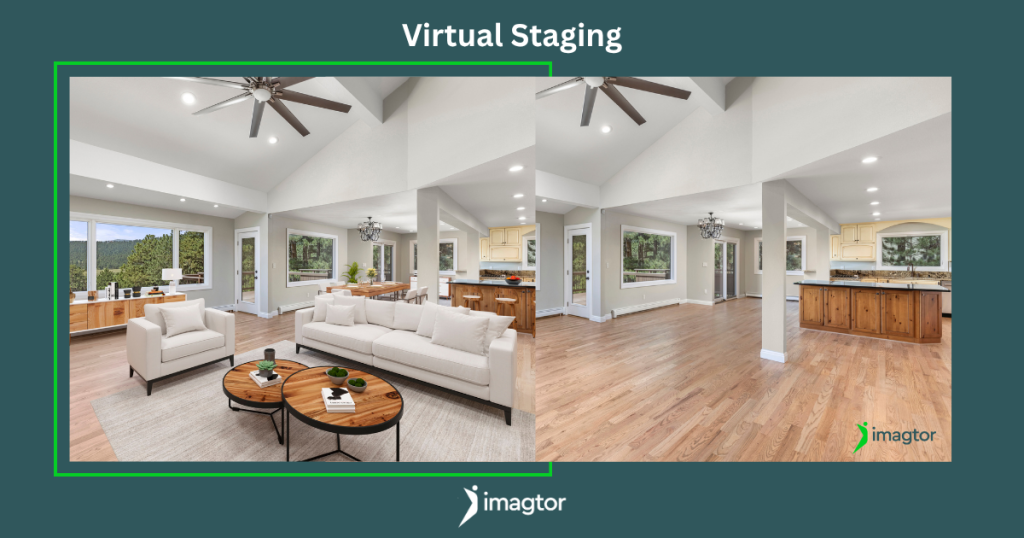
Color & Texture: Stick with natural hues – think white walls, light oak flooring, and matte finishes. Avoid excessive décor. One bold accent (like a navy cushion or dark-framed art) adds contrast without crowding the space.
Lighting Tip: Use bright, even daylight to make rooms feel bigger. During photo editing, enhance exposure slightly but preserve texture on walls and floors for realism.
This clean, polished look resonates strongly with millennial and Gen Z buyers who prefer modern, functional, and easy-to-maintain spaces.
Luxury Contemporary
Ideal for: High-end apartments, penthouses, and executive homes.
This style focuses on elegance, sophistication, and balance. It features sleek furniture, metallic accents, and bold contrasts – all designed to convey exclusivity.
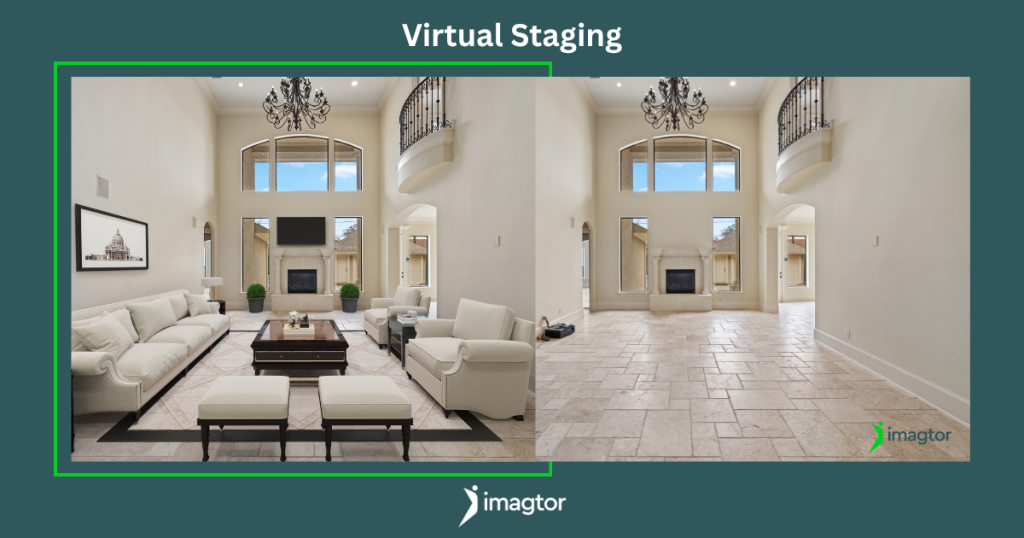
Color & Texture: Think rich neutrals like taupe, charcoal, and cream, paired with glossy marble, glass, or brushed steel. Statement art and ambient lighting give the space personality.
Lighting Tip: Editors often use soft highlights and reflections in photo editing to emphasize depth and shine. Pay attention to how light interacts with surfaces like marble or glass to maintain authenticity.
The Luxury Contemporary style is perfect for listings where premium presentation justifies higher pricing. A single well-staged photo can set the tone for the entire marketing campaign.
Coastal & Hamptons Style
Ideal for: Beachside homes or bright suburban properties.
This look combines light tones, airy fabrics, and ocean-inspired hues. Whitewashed furniture, pale woods, and soft blues create a calm, breezy atmosphere that appeals to buyers seeking a relaxed lifestyle.
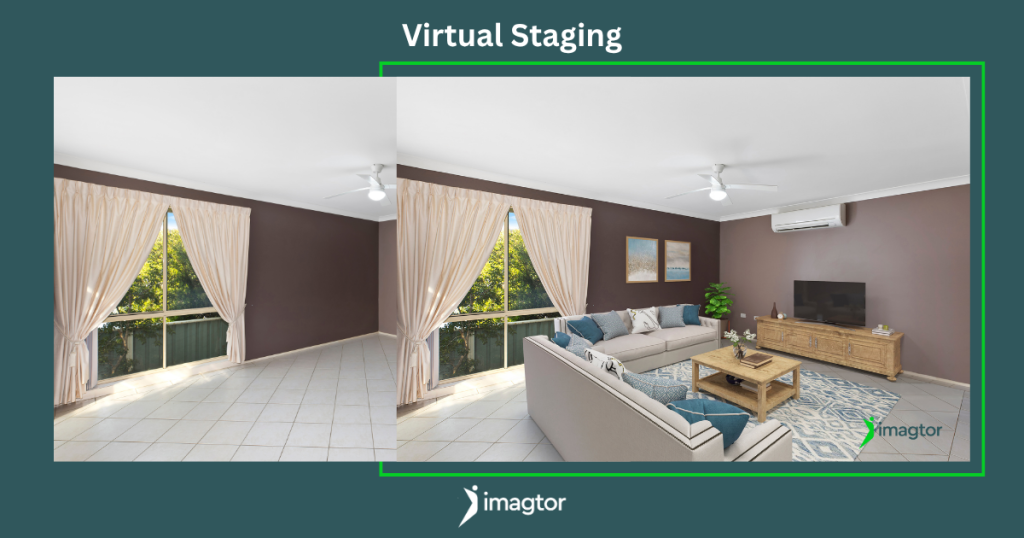
Color & Texture: Use white or cream walls with accents of light blue or sand beige. Materials like linen, jute, and rattan add a tactile sense of comfort.
Lighting Tip: Emphasize natural sunlight through wide windows. In photo editing, keep whites crisp and shadows light to enhance the coastal glow.
This style connects emotionally with buyers by evoking the feeling of fresh air and seaside serenity, even when the home isn’t near the coast.
Japandi & Scandinavian
Ideal for: Modern apartments and homes targeting design-conscious buyers.
A fusion of Japanese minimalism and Scandinavian warmth, Japandi has quickly become one of the most requested virtual staging styles. It’s about simplicity, balance, and connection with nature.
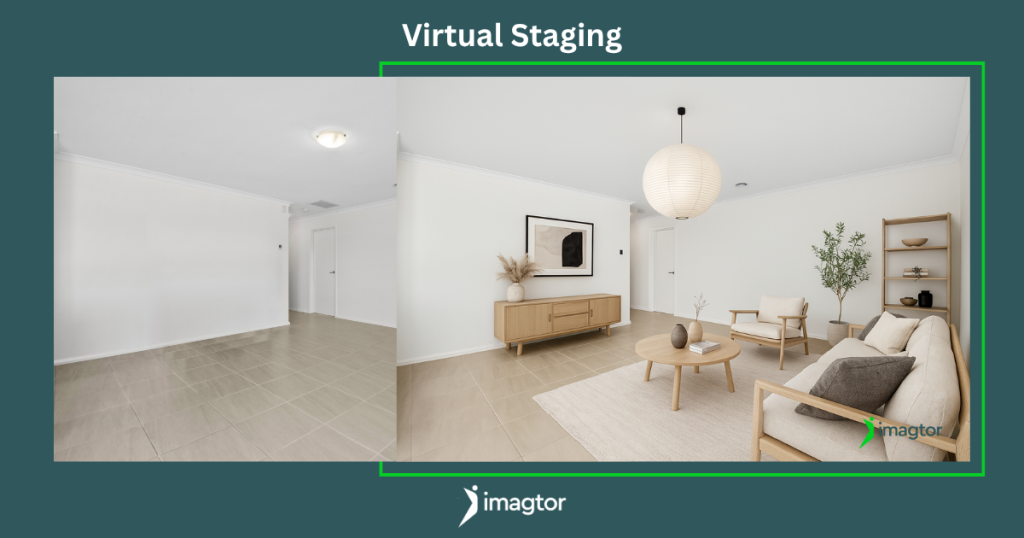
Color & Texture: Combine warm wood tones with soft neutrals like ivory, beige, or muted green. Use low-profile furniture, clean lines, and subtle decorative accents.
Lighting Tip: Natural, soft lighting is key. Editors can apply gentle tonal adjustments in photo editing to highlight organic materials without overexposing the image.
This staging style works well globally, especially in markets where design and wellness are selling points. It makes rooms feel peaceful, intentional, and timeless.
Traditional & Farmhouse
Ideal for: Family homes, suburban, and countryside listings.
This timeless style evokes comfort and nostalgia. It features cozy textures, classic furniture, and soft colors that appeal to family-oriented buyers.
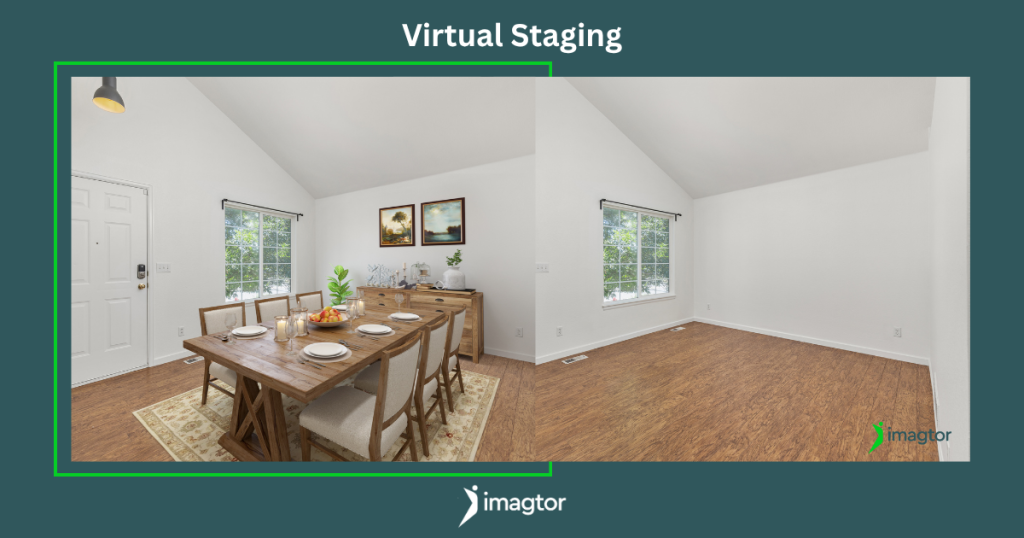
Color & Texture: Warm beige, cream, and muted green dominate, with plenty of natural wood. Add textiles like knitted throws, plaid pillows, and rustic ceramics.
Lighting Tip: Soft, warm lighting enhances the welcoming mood. Editors can use subtle color correction to bring out wood tones and maintain cozy contrast without making the image too dark.
Buyers connect emotionally with this look because it feels like “home.” It invites them to imagine gatherings, warmth, and long-term comfort.
Urban Industrial
Ideal for: Lofts, renovated spaces, and downtown apartments.
Raw, edgy, and full of character, the Urban Industrial style celebrates exposed materials and moody tones. It’s perfect for younger, trend-focused buyers.
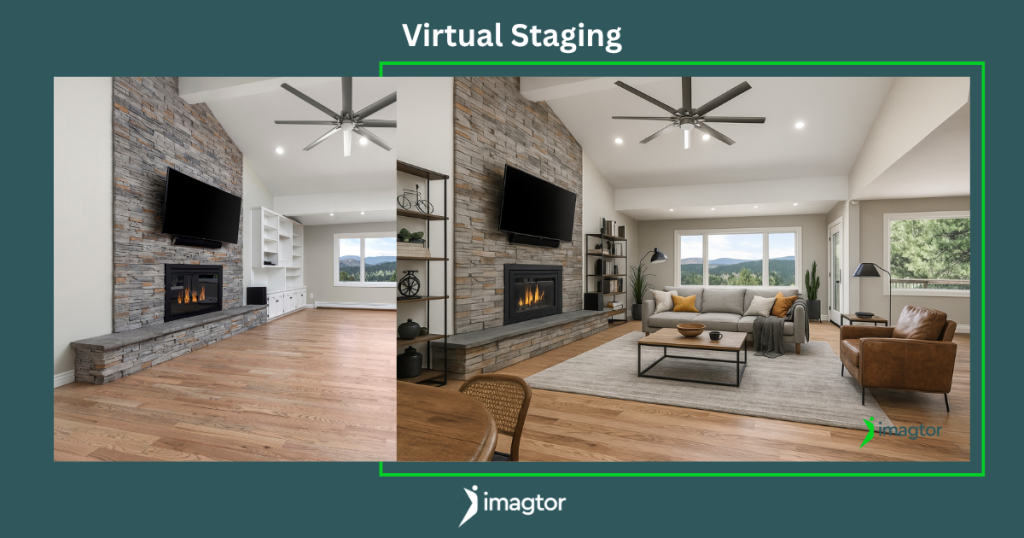
Color & Texture: Exposed brick, black metal, and dark woods set the tone. Combine these with leather textures, Edison bulbs, and bold artwork.
Lighting Tip: Balance dark tones with warm artificial lighting. In post-processing, maintain contrast while ensuring shadows reveal texture rather than swallowing detail.
This look performs well in metropolitan markets, adding personality and a sense of authenticity to properties with history or industrial charm.
How to Choose the Right Virtual Staging Style
Picking the best virtual staging style depends on the property type, target demographic, and intended mood.
- Modern Minimalist for first-time buyers or condos.
- Luxury Contemporary for premium listings.
- Coastal & Hamptons for bright, open homes.
- Japandi for design-savvy audiences.
- Farmhouse for families or rural homes.
- Urban Industrial for creative or urban professionals.
Understanding who your audience is will guide every design decision – from wall color to furniture placement. The goal is always to help buyers feel something the moment they see your photos.
How Professional Editors Bring Virtual Staging to Life
Behind every compelling virtual staging project is technical precision. Editors use advanced tools like Photoshop, 3ds Max, and SketchUp to integrate virtual furniture seamlessly into real photos.
Details such as lighting direction, color temperature, and perspective alignment are crucial. High-end photo editing ensures that every chair, rug, and shadow looks authentic and natural.
With AI-assisted tools, editors can now analyze light angles, auto-adjust shadows, and generate materials that match real-world physics. Outsourcing this process to professionals saves real estate photographers both time and cost – reducing turnaround time by up to 60% while maintaining consistency across projects.
Why Partner with Imagtor for Virtual Staging
Imagtor provides expert virtual staging services that help real estate photographers transform raw property photos into captivating marketing visuals.
Our editors specialize in creating customized staging designs, from minimalist condos to luxury mansions – ensuring that every photo aligns with the property’s personality and market appeal.
Beyond staging, Imagtor also offers photo editing, virtual renovation, floor plans, and property videography, giving photographers and agencies a complete content solution for real estate marketing.
Enhance your listings with expert virtual staging service by Imagtor. Our professional editors craft photorealistic designs that capture attention and inspire buyers. Get started today with a FREE TRIAL and 10% BULK DISCOUNT on your first order.
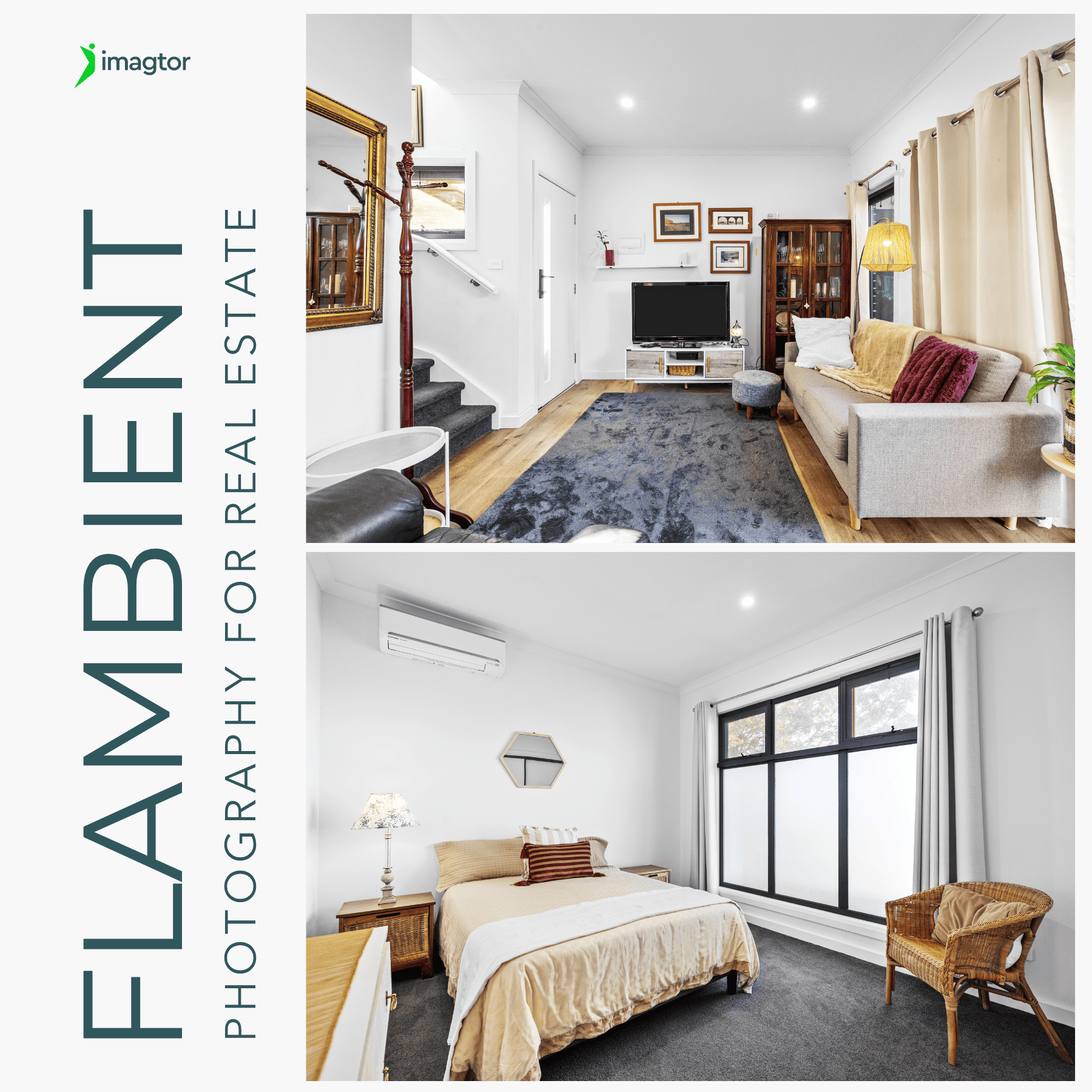
Flambient photography has become the go-to lighting technique for serious real estate photographers in 2026. It combines the natural light range of HDR with the color accuracy of flash, producing interior images that look clean, warm, and genuinely believable without the over-processed look that heavy HDR editing creates. This guide covers what flambient photography actually …
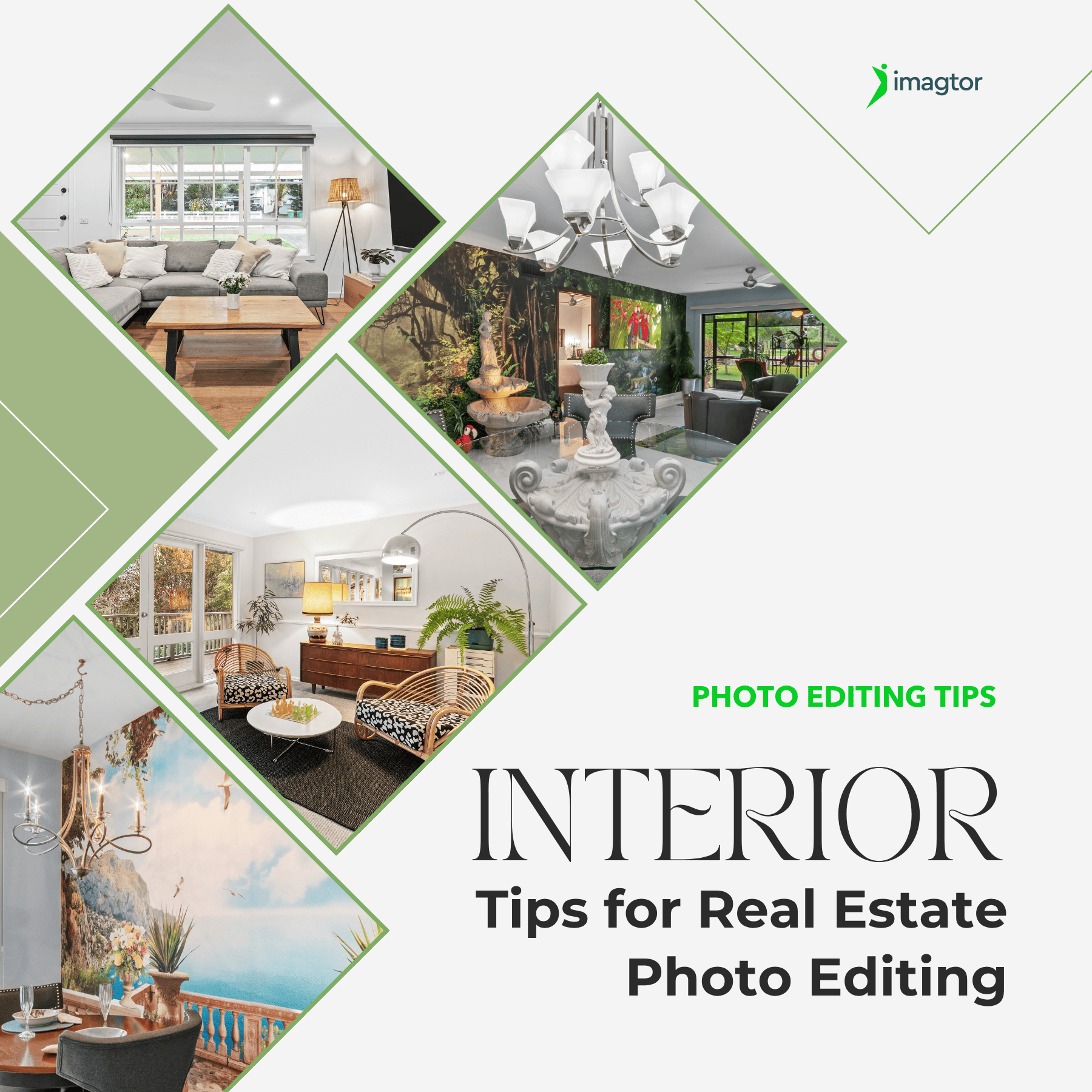
Interior real estate photo editing is where most of the work happens after a shoot. Getting exposure, color, and detail right across a full gallery is what separates listings that actually get clicks from ones that get skipped past. This guide covers the core techniques professionals use, in the order they actually matter, so every …