

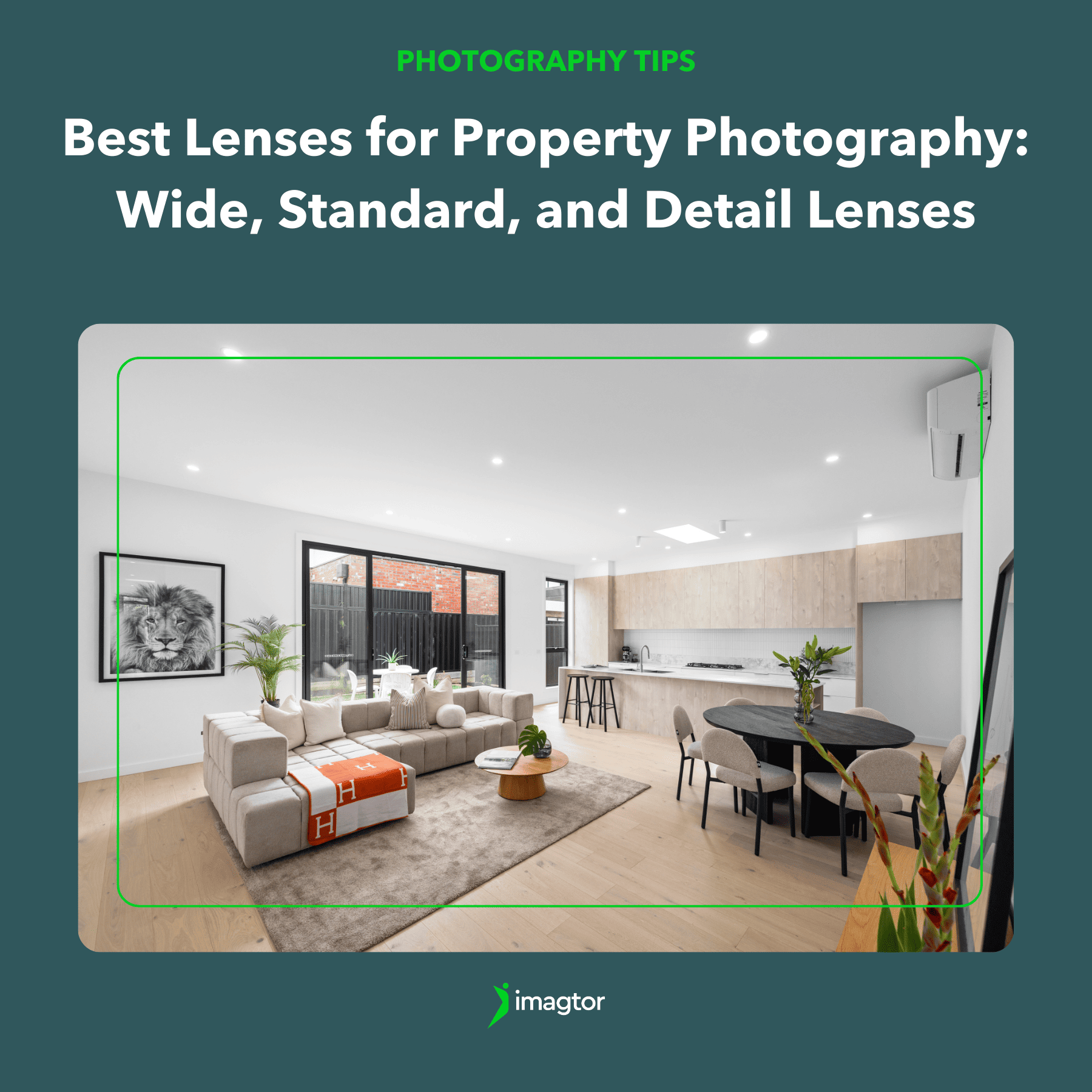
Choosing the right lens for property photography can significantly influence how a property appears in listing images. Different lenses serve different purposes, from capturing entire interiors to highlighting architectural details. Understanding how each type works helps photographers create clear, balanced, and appealing real estate photos.
Wide Angle Lens for Property Photography
The most essential lens for property photography is the wide angle lens. This type of real estate photography lens allows photographers to capture large portions of a room in a single frame, which is especially important when photographing interiors.
Typical focal lengths include:
- 16mm – 24mm for full-frame cameras
- 10mm – 16mm for APS-C cameras
Wide angle lenses are commonly used for photographing:
- Living rooms
- Bedrooms
- Kitchens
- Dining areas
- Open-plan interiors
These lenses increase the field of view, allowing photographers to show more of the space even when shooting distance is limited. For property listings, this helps buyers understand the layout and overall size of a room.
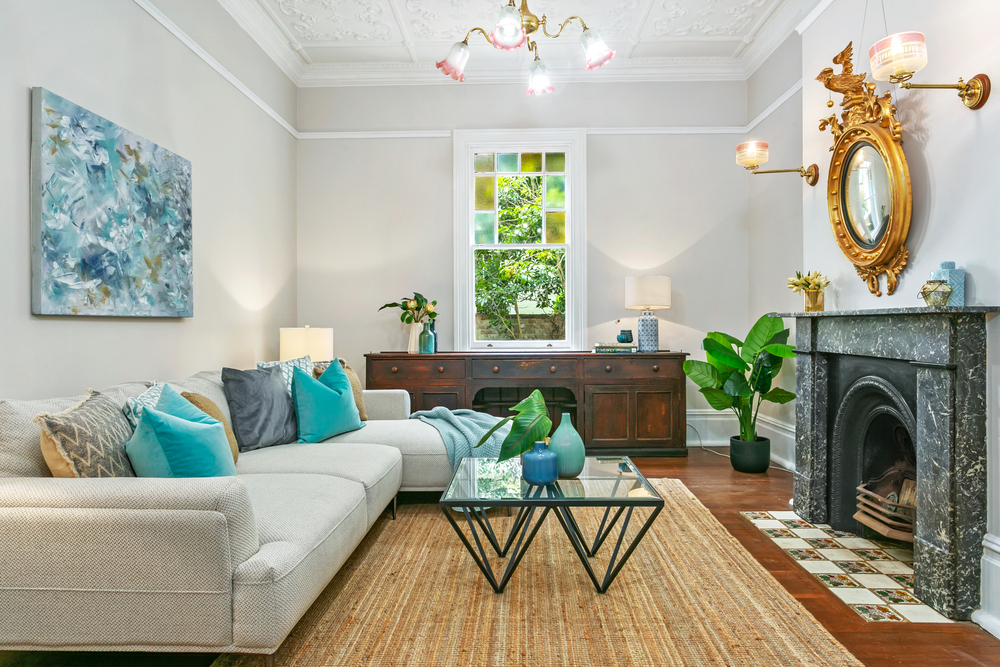
Some widely used models among professional real estate photographers include:
- Canon EF 16-35mm f/4L IS USM
- Nikon AF-S 16-35mm f/4G ED VR
- Sony FE 16-35mm f/4 ZA OSS
A wide angle lens for real estate photography helps present rooms as spacious and inviting. However, photographers should avoid going excessively wide. Extreme focal lengths can introduce perspective distortion, making walls appear curved or objects near the edges stretched.
Maintaining straight vertical lines and careful camera positioning ensures that the property still appears natural and accurate.
Ultra-Wide Lenses for Small Interior Spaces
In some situations, photographers need an even wider lens for property photography to capture extremely tight spaces. Ultra-wide lenses are often used in small apartments or compact rooms where stepping back is not possible.
Typical focal lengths include:
- 10mm – 14mm
These lenses are particularly useful for photographing:
- Bathrooms
- Narrow hallways
- Small kitchens
- Compact studio apartments
Because these spaces provide very limited shooting distance, ultra-wide lenses allow photographers to include the entire room in a single image.
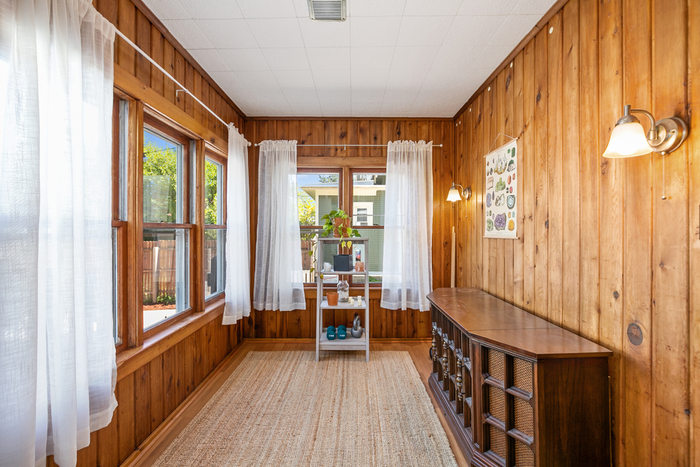
Common ultra-wide models include:
- Canon EF-S 10-18mm f/4.5–5.6 IS STM
- Nikon AF-P DX 10-20mm f/4.5–5.6G VR
- Sony E 10-18mm f/4 OSS
While these lenses are helpful, they must be used carefully. Ultra-wide lenses increase perspective distortion, which can make furniture or walls appear exaggerated. Photographers should keep the camera level and avoid placing important elements near the edges of the frame.
In many cases, perspective correction during editing helps refine images produced by this type of real estate photography lens.
Standard Lenses for Natural Perspective
Standard lenses provide a more natural viewing angle compared to wide lenses. A standard lens for property photography closely resembles how the human eye perceives space, which helps maintain realistic proportions.
Typical focal lengths include:
- 35mm – 50mm
Standard lenses work well for:
- Exterior property shots
- Front entrances
- Medium-sized rooms
- Lifestyle or branding images featuring agents
Unlike ultra-wide lenses, these lenses create minimal distortion. This makes them useful when accuracy is especially important, such as when photographing a property façade or landscaping.
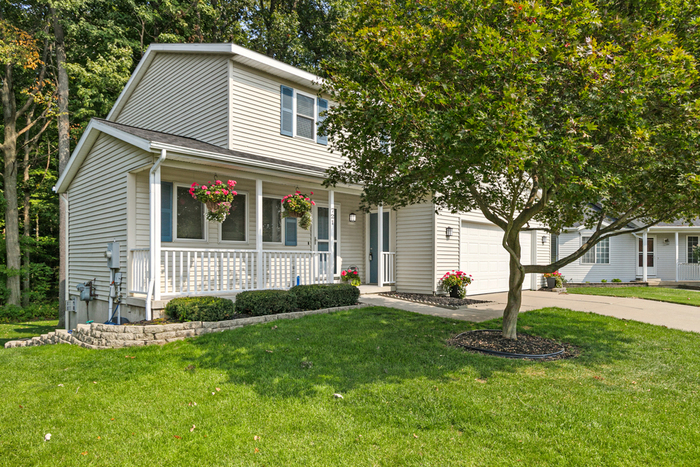
Popular models include:
- Canon RF 35mm f/1.8 IS Macro STM
- Nikon Z 35mm f/1.8 S
- Sony FE 35mm f/1.8
A standard real estate photography lens is often used alongside a wide lens. While wide lenses capture interior layouts, standard lenses provide balanced images that look natural and realistic.
Telephoto Lenses for Detail Shots
Property listings often benefit from detail images that highlight craftsmanship and design features. Telephoto lenses help photographers capture these elements with precision.
Typical focal lengths include:
- 70mm – 200mm
Telephoto lenses are useful for photographing:
- Architectural details
- Interior design elements
- Lighting fixtures
- Kitchen surfaces and materials
- Decorative features
- Landscaping and outdoor structures
These lenses compress perspective and isolate subjects, helping details stand out against the background.
Popular telephoto lenses used in property photography include:
- Canon RF 70-200mm f/4L IS USM
- Nikon Z 70-200mm f/2.8 VR S
- Sony FE 70-200mm f/4 G OSS
Although telephoto lenses are not the primary lens for property photography, they are valuable when creating variety within a photo gallery. Detail shots can emphasize luxury finishes and add visual interest to real estate listings.
In luxury real estate photography, these images often help communicate quality and craftsmanship.
Tilt-Shift Lenses for Architectural Photography
Tilt-shift lenses represent a more advanced category of architectural photography lens. These lenses allow photographers to correct perspective directly in the camera.
Typical focal lengths include:
- 17mm tilt-shift
- 24mm tilt-shift
Key advantages include:
- Maintaining perfectly straight vertical lines
- Preventing buildings from appearing to lean backward
- Correcting distortion in architectural structures
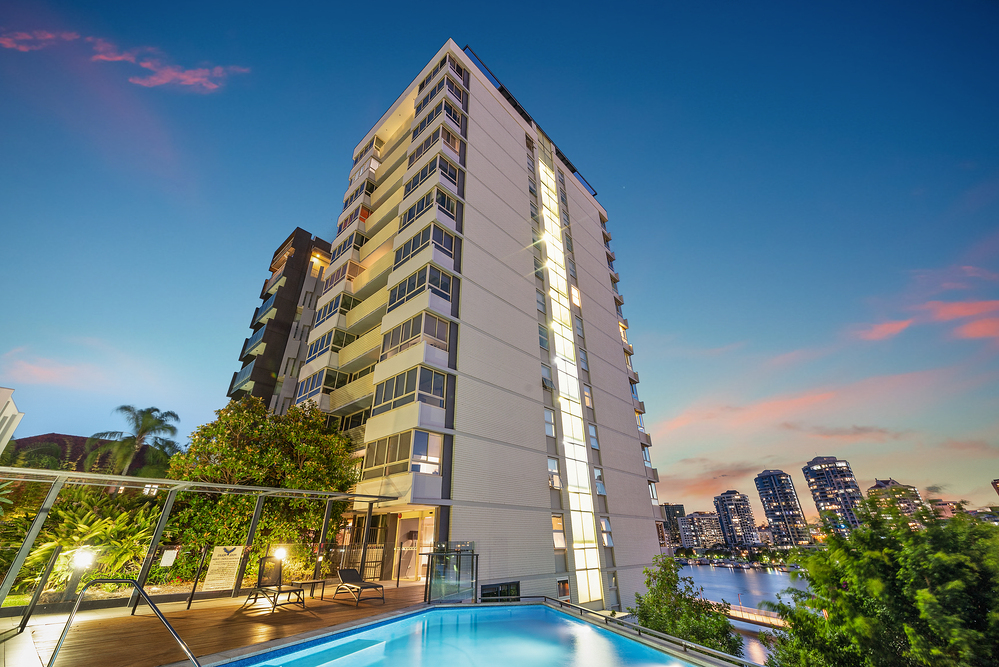
Well-known tilt-shift models include:
- Canon TS-E 17mm f/4L
- Nikon PC-E 24mm f/3.5D ED
- Laowa 15mm f/4 Wide Angle Macro Shift
These lenses are commonly used in architectural photography and high-end real estate marketing. They provide exceptional control over perspective, which is particularly useful when photographing tall buildings or luxury properties.
Tilt-shift lenses require more technical skill than standard lenses, but they produce extremely precise results. For photographers specializing in architectural or commercial real estate photography, they can be a valuable investment.
Choosing the Best Lens for Property Photography
Selecting the best lens for property photography depends on several practical factors. Different properties require different shooting approaches, and lens choice should match the environment.
Photographers should consider:
- Camera sensor size (full frame or crop sensor)
- Interior space dimensions
- Exterior photography needs
- Type of property being photographed
For most real estate photographers, a wide angle lens remains the most frequently used tool. It allows interior spaces to be photographed efficiently while still maintaining visual clarity.
However, combining multiple lenses provides more flexibility. A wide angle lens captures the full room layout, while standard lenses create balanced exterior images. Telephoto lenses can then highlight important design elements.
Understanding how each lens for property photography functions helps photographers produce more complete and professional real estate image sets.
Building a Reliable Lens Setup for Property Photography
A successful property photography workflow relies on choosing the right tools for different shooting scenarios. Wide angle lenses capture spacious interiors, standard lenses maintain natural perspective, and telephoto lenses emphasize design details.
Each type of lens for property photography contributes to presenting a property accurately while highlighting its most attractive features. When photographers understand how to use these lenses effectively, they can create images that communicate space, layout, and architectural quality more clearly.
Over time, investing in high-quality lenses and developing technical control allows photographers to produce consistent results across different property types and listing styles.
Even with the best lens for property photography, professional editing plays an important role in delivering clean and consistent real estate images. Proper exposure balancing, perspective correction, and color adjustments ensure that each photo accurately represents the space.
Imagtor supports real estate photographers with reliable editing workflows that enhance interior brightness, correct vertical lines, and maintain natural color tones across every image set.
Start today with a FREE TRIAL and 10% DISCOUNT and see how professional real estate photo editing can elevate your property photography results.
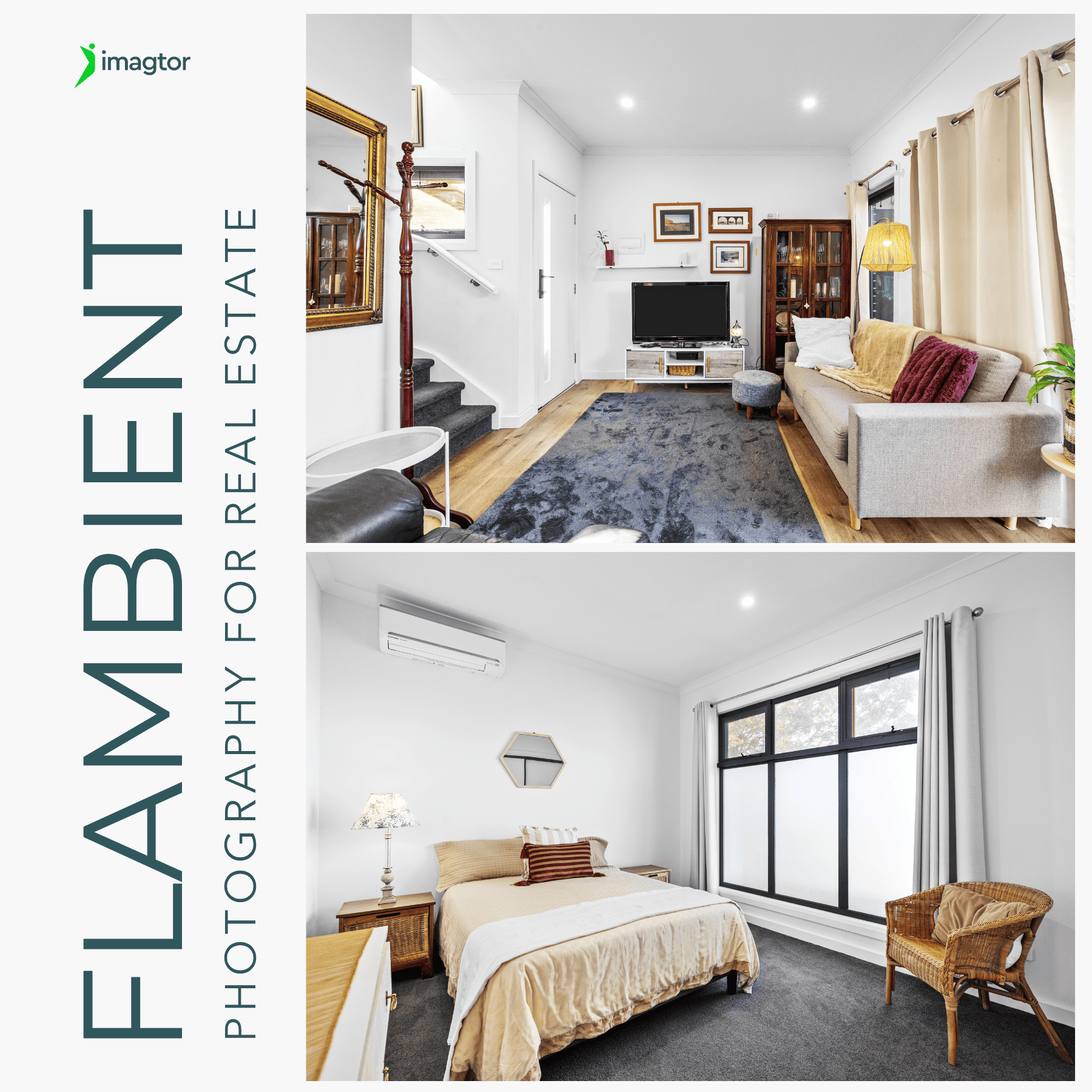
Flambient photography has become the go-to lighting technique for serious real estate photographers in 2026. It combines the natural light range of HDR with the color accuracy of flash, producing interior images that look clean, warm, and genuinely believable without the over-processed look that heavy HDR editing creates. This guide covers what flambient photography actually …
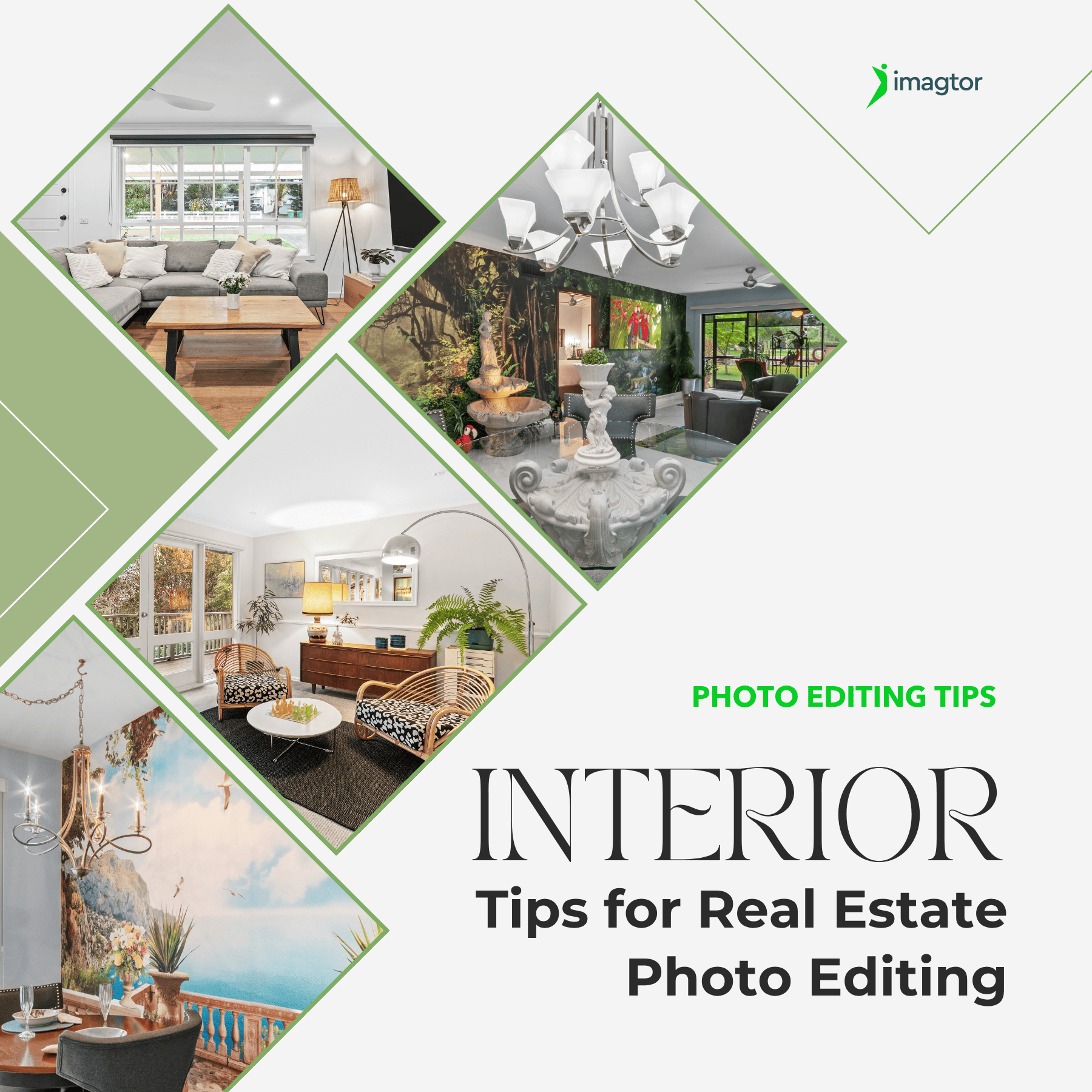
Interior real estate photo editing is where most of the work happens after a shoot. Getting exposure, color, and detail right across a full gallery is what separates listings that actually get clicks from ones that get skipped past. This guide covers the core techniques professionals use, in the order they actually matter, so every …