

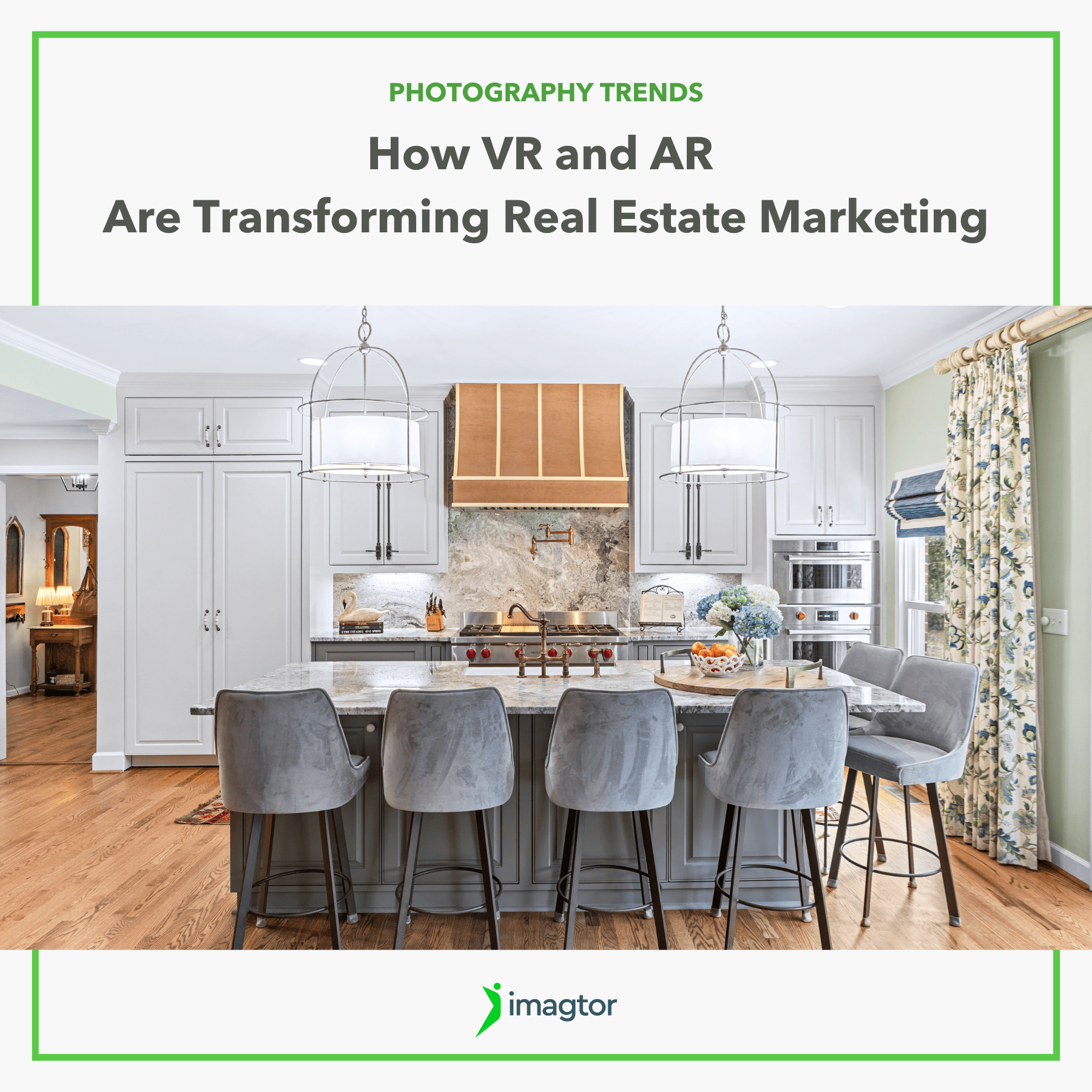
The real estate market has always been driven by visuals, but today’s buyers demand more than just high-quality photos. With VR and AR, agents and photographers are introducing immersive experiences that give clients a true sense of a property before stepping inside. This shift is reshaping how listings are presented, marketed, and sold.
The Rise of VR and AR in Real Estate
Over the past decade, VR (virtual reality) and AR (augmented reality) have evolved from futuristic concepts into practical tools. For real estate professionals, the timing couldn’t be better. Buyers, especially millennials and Gen Z, are increasingly comfortable with digital-first solutions.
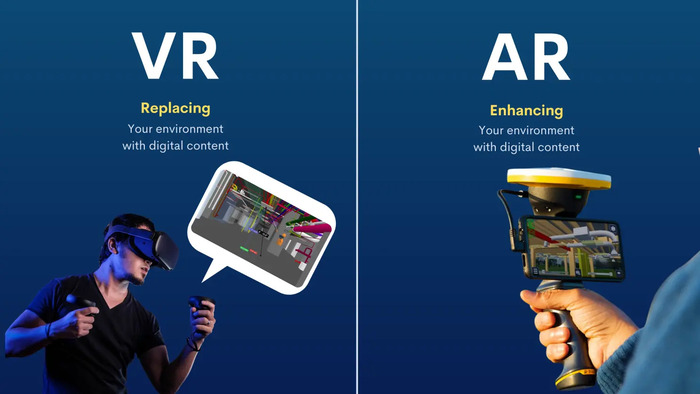
Instead of relying solely on photo editing and traditional photography, real estate agents are offering virtual tours powered by VR. These tours allow buyers to “walk through” a property from their couch, exploring every room at their own pace. AR, on the other hand, lets clients superimpose digital elements onto the physical world – for example, visualizing how new furniture might look in a home using virtual staging.
This level of immersion not only makes listings stand out but also speeds up decision-making, reducing wasted visits and helping agents close faster.
Why Immersive Experiences Matter to Buyers
Buying a property is a highly emotional decision, and photos can only go so far. VR and AR provide buyers with:
- A sense of space and flow: VR-powered virtual tours help buyers understand room dimensions and layout better than any floor plan.
- Realistic personalization: AR enables clients to test furniture arrangements, finishes, or even renovations through interactive staging.
- Confidence in decision-making: By experiencing the property in detail before a physical visit, buyers feel more prepared and reassured.
For real estate photographers, this shift means more opportunities to integrate 3D scanning, panoramic photography, and advanced photo editing into their service packages. Instead of simply delivering images, they can deliver experiences.
Virtual Staging and Its Role in AR
Staging has always been crucial for selling properties, but traditional staging is expensive and time-consuming. That’s where virtual staging powered by AR shines.
With AR apps, buyers can pull out their phone or tablet, point it at an empty room, and see it fully furnished in real time. For agents, this means:
- Lower costs compared to physical staging.
- Multiple design styles showcased in a single listing.
- Flexibility to appeal to diverse buyer preferences.
And for sellers, virtual staging highlights the potential of their property without requiring heavy investment. For buyers, it offers visualization tools that make spaces easier to imagine as their future home.
Virtual Tours: The VR Advantage
While AR enhances what exists in the physical world, VR provides an entirely immersive digital environment. Virtual tours are becoming standard in real estate marketing because they:
- Allow remote buyers to explore properties in detail.
- Create 24/7 open houses without scheduling conflicts.
- Enhance listing visibility by standing out in crowded online marketplaces.

For international buyers or those relocating from afar, VR is a game-changer. They can explore multiple properties virtually, narrow their options, and only travel to see the most promising ones in person.
For photographers, adding VR-ready services – such as 360-degree photography, panoramic shots, and professional photo editing – creates new revenue streams and sets them apart from competitors.
>>> Read more: 3D Property Trends Every Photographer Should Know
How VR and AR Are Reshaping Real Estate Marketing Strategies
Real estate agents are no longer relying only on static images. Instead, they’re investing in diverse visual formats to attract today’s digital-savvy buyers. These include:
- VR showrooms where multiple properties can be explored in one immersive session.
- AR-enhanced brochures that come alive with 3D renderings when scanned with a smartphone.
- Interactive floor plans that connect seamlessly with virtual tours.
This diversification helps agents market more effectively across social media, property platforms, and private presentations. At the same time, outsourcing editing for VR and AR content ensures faster delivery without compromising quality – a key advantage when speed to market matters.
The Role of Real Estate Photographers in the VR/AR Era
Photographers remain at the heart of this transformation. A great VR or AR experience still relies on high-quality visual input, and that starts with professional photography and editing.
Real estate photographers who embrace these technologies can:
- Expand their service offerings from static photos to VR-ready tours.
- Partner with agencies for outsourced editing of 3D imagery.
- Offer bundled packages that include traditional photos, virtual staging, and virtual tours.
By blending photography, editing, and immersive tech, photographers move from being service providers to strategic partners in property marketing.

Challenges to Consider
Like any new technology, VR and AR bring challenges:
- Cost: High-quality VR equipment and software can be expensive.
- Learning curve: Photographers and agents may need training to use tools effectively.
- Compatibility: Ensuring virtual tours and AR apps work across devices can be complex.
However, outsourcing technical tasks – from advanced photo editing to VR integration – helps professionals stay competitive while keeping costs manageable.
Looking Ahead: The Future of VR and AR in Real Estate
As VR headsets become more affordable and AR features integrate seamlessly into smartphones, adoption will only grow. In the near future, buyers may expect VR tours as a standard part of listings, just as they now expect high-quality photos.
Agents who embrace VR and AR early gain a competitive edge. Photographers who build skills in virtual staging, 3D capture, and editing will secure new revenue streams. Ultimately, these technologies aren’t replacing traditional methods. They’re enhancing them, helping agents tell better stories and helping buyers make faster, more confident decisions.
Conclusion
VR and AR are no longer experimental tools. They are becoming central to real estate marketing. With virtual tours, virtual staging, and other immersive solutions, properties are presented in ways that resonate with today’s buyers. For real estate agents and photographers alike, integrating these technologies means staying relevant, competitive, and forward-thinking.
At Imagtor, we specialize in supporting real estate photographers and agents with professional photo editing, virtual staging, and advanced visual formats that bring listings to life. Start today with a FREE TRIAL and enjoy 10% OFF your first project.
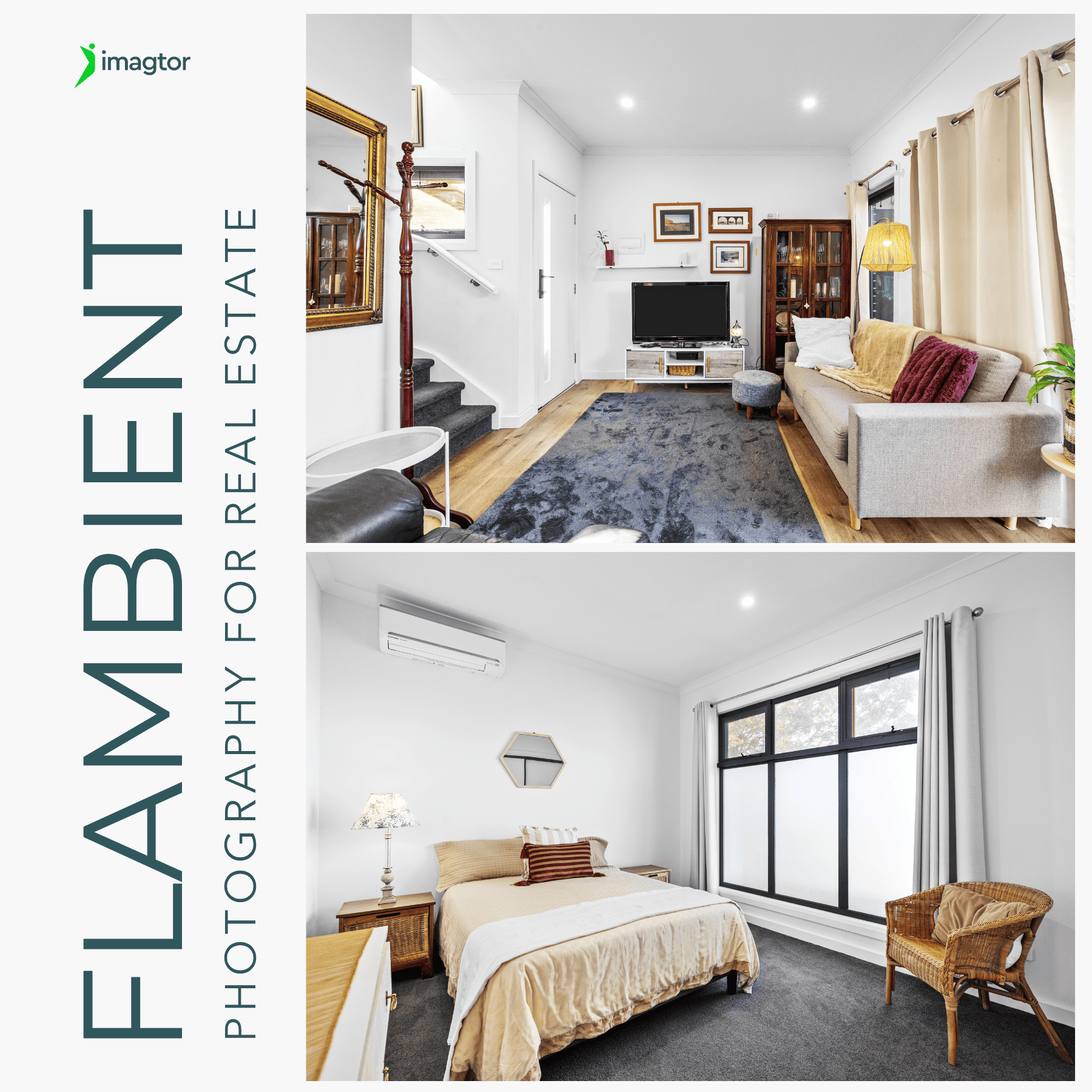
Flambient photography has become the go-to lighting technique for serious real estate photographers in 2026. It combines the natural light range of HDR with the color accuracy of flash, producing interior images that look clean, warm, and genuinely believable without the over-processed look that heavy HDR editing creates. This guide covers what flambient photography actually …

Interior real estate photo editing is where most of the work happens after a shoot. Getting exposure, color, and detail right across a full gallery is what separates listings that actually get clicks from ones that get skipped past. This guide covers the core techniques professionals use, in the order they actually matter, so every …