

In the dynamic world of real estate photography, the tools of the trade have evolved significantly. As of 2025, photographers are presented with a plethora of options, particularly when choosing between DSLR and mirrorless cameras. Each system offers distinct advantages tailored to specific shooting scenarios. This comprehensive guide delves into the nuances of both, providing insights into their pros and cons, optimal usage scenarios, and top camera recommendations to elevate your real estate photography endeavors.
DSLR vs. Mirrorless: A Detailed Comparison
1. Autofocus and Speed
Mirrorless cameras have revolutionized autofocus capabilities. Models like the Sony A7 IV and Canon EOS R6 Mark II boast advanced autofocus systems with near 100% frame coverage, ensuring precise focusing even in challenging lighting conditions. This is particularly beneficial in real estate photography, where capturing sharp details in varying light scenarios is crucial. On the other hand, DSLRs like the Nikon D850 offer reliable autofocus but may lag in speed and coverage compared to their mirrorless counterparts.
2. Electronic Viewfinder (EVF) vs. Optical Viewfinder
The EVF in mirrorless cameras provides a real-time preview of exposure, white balance, and depth of field, allowing photographers to make immediate adjustments. This feature reduces post-processing time and ensures accurate captures. Conversely, DSLRs utilize optical viewfinders, offering a clear, lag-free view but lacking real-time exposure previews, which can lead to more trial-and-error during shoots.
3. Size and Weight
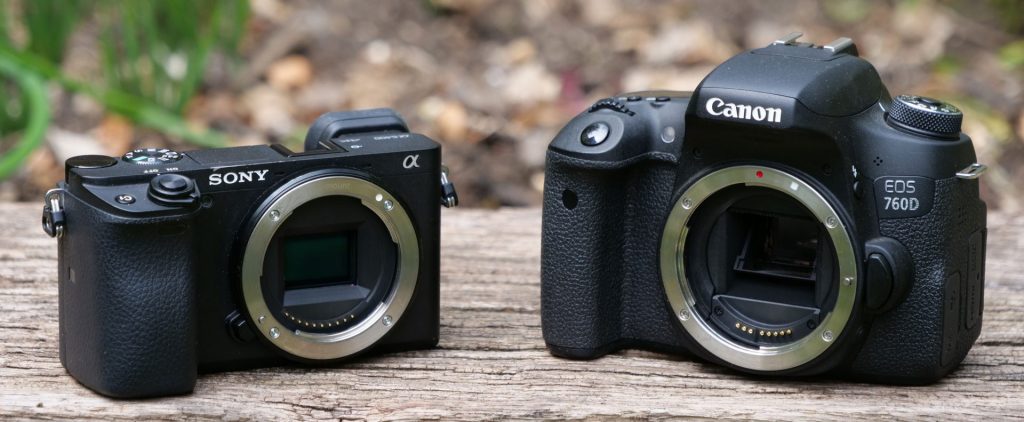
Mirrorless cameras are generally more compact and lightweight, making them ideal for photographers who shoot multiple properties daily. Their portability reduces fatigue during extended shoots and allows for easier maneuverability in tight spaces. In contrast, DSLRs are typically bulkier, which can be cumbersome during prolonged sessions or when using additional equipment like gimbals.
4. Lens Compatibility
While mirrorless systems are expanding their native lens selections, some may require adapters to use DSLR lenses, potentially affecting autofocus performance. However, brands like Sony offer a wide range of native lenses, including third-party options, providing flexibility for various shooting scenarios. DSLRs benefit from a vast selection of native lenses, offering photographers a plethora of choices to suit their specific needs.
5. Pros and Cons
| Camera Type | Pros | Cons |
|---|---|---|
| DSLR Cameras | – Optical viewfinder for a direct, real-time view through the lens.- Longer battery life due to low-power optical system.- Robust build quality, durable in various shooting conditions. | – Bulkier and heavier, harder to maneuver in tight spaces.- Autofocus may be slower or less accurate than modern mirrorless cameras. |
| Mirrorless Cameras | – Compact and lightweight design, highly portable.- Electronic viewfinders or LCD screens with real-time exposure previews.- Advanced autofocus features, including eye and face detection. | – Shorter battery life due to electronic displays.- Extra batteries are often needed for extended shoots. |
6. When to Use
* DSLRs are ideal when:
- Extended battery life is crucial, such as during all-day shoots without easy access to charging facilities.
- The photographer prefers an optical viewfinder for composing shots in bright outdoor settings.
- A robust, weather-sealed body is needed for shooting in varying environmental conditions.
* Mirrorless cameras excel when:
- Portability and lightweight gear are priorities, especially when shooting multiple properties in a day.
- Advanced autofocus features are desired for capturing sharp images quickly.
- Real-time exposure previews aid in achieving accurate exposures without extensive post-processing.
7. How to Use Each System Effectively
| Camera Type | Tips / Best Practices |
|---|---|
| DSLR Cameras | – Utilize the optical viewfinder to compose shots, ensuring accurate framing and focus. – Take advantage of extended battery life for longer shooting sessions without frequent battery changes. – Employ the robust build to shoot confidently in various environments, from sunny exteriors to dimly lit interiors. |
| Mirrorless Cameras | – Use the electronic viewfinder or LCD screen to preview exposure settings in real-time, adjusting as necessary for optimal results. – Leverage advanced autofocus features to quickly and accurately focus on subjects, enhancing efficiency during shoots. – Carry spare batteries to compensate for shorter battery life, ensuring uninterrupted shooting sessions. |
Top DSLR Camera Picks
Canon EOS 5D Mark IV
The Canon EOS 5D Mark IV remains a stalwart in the DSLR realm, offering a 30.4MP full-frame sensor that delivers exceptional image quality. Its Dual Pixel CMOS AF system ensures swift and accurate autofocus, even in live view mode, making it suitable for both stills and video. The camera’s robust build and weather sealing provide durability, essential for real estate photographers working in diverse environments. With 4K video capabilities, it also caters to the growing demand for virtual property tours. The extensive EF lens ecosystem further enhances its versatility, allowing photographers to choose from a wide range of lenses to suit various shooting scenarios.
Nikon D850
The Nikon D850 is renowned for its 45.7MP full-frame sensor, delivering ultra-high-resolution images that capture intricate details, crucial for showcasing property features. Its wide dynamic range ensures balanced exposures, even in challenging lighting conditions. The 153-point autofocus system provides precise focusing, while the 7 fps continuous shooting speed allows for capturing multiple angles swiftly. The D850’s rugged construction and weather sealing make it a reliable choice for real estate photographers who require a durable and versatile camera.
Pentax K-1 Mark II
The Pentax K-1 Mark II is a high-resolution full-frame DSLR ideal for real estate photography, thanks to its 36.4MP sensor and Pixel Shift Resolution System II, which deliver sharp, detailed images with accurate color. Its strong low-light performance (ISO up to 819,200) and fully weather-sealed body make it versatile for both interior and exterior shoots. While its autofocus is slower than rivals and lens options are more limited, features like the articulating LCD screen and excellent dynamic range make it a solid choice for capturing high-quality static scenes in real estate settings.
Top Mirrorless Camera Picks

Sony Alpha 7 IV
The Sony Alpha 7 IV stands out with its 33MP full-frame sensor, offering exceptional image quality and dynamic range. Its advanced autofocus system, featuring real-time eye and subject tracking, ensures sharp images, enhancing efficiency during shoots. The camera’s 4K video capabilities at 60fps cater to the increasing demand for high-quality virtual tours. Its compact design and lightweight build make it ideal for photographers who need to move swiftly between locations. Additionally, the extensive range of compatible lenses provides flexibility to adapt to various shooting requirements.
Canon EOS R6 Mark II
The Canon EOS R6 Mark II offers a 24MP full-frame sensor, delivering excellent image quality with impressive low-light performance. Its Dual Pixel CMOS AF II system provides fast and accurate autofocus, crucial for capturing sharp images in dynamic shooting environments. The camera’s in-body image stabilization ensures steady shots, even when shooting handheld. With 4K video recording capabilities, it supports the creation of immersive property walkthroughs. The R6 Mark II’s ergonomic design and intuitive controls enhance user experience, making it a valuable tool for real estate photographers.
Nikon Z7 II
The Nikon Z7 II features a 45.7MP full-frame sensor, delivering ultra-high-resolution images that capture the finest details of property interiors and exteriors. Its wide dynamic range ensures balanced exposures, even in scenes with significant contrast. The camera’s advanced autofocus system provides precise focusing, while the in-body image stabilization allows for sharp handheld shots. With 4K video capabilities, the Z7 II supports the production of high-quality virtual tours. Its robust build and weather sealing make it a dependable choice for real estate photographers operating in various conditions.
Unlock the full potential of your DSLR or mirrorless camera with professional real estate photo editing. Partner with Imagtor to enhance your listings, save time, and deliver stunning visuals that attract buyers. Get started today with a FREE TRIAL and 10% BULK DISCOUNT!
Flambient photography has become the go-to lighting technique for serious real estate photographers in 2026. It combines the natural light range of HDR with the color accuracy of flash, producing interior images that look clean, warm, and genuinely believable without the over-processed look that heavy HDR editing creates. This guide covers what flambient photography actually …

Interior real estate photo editing is where most of the work happens after a shoot. Getting exposure, color, and detail right across a full gallery is what separates listings that actually get clicks from ones that get skipped past. This guide covers the core techniques professionals use, in the order they actually matter, so every …