

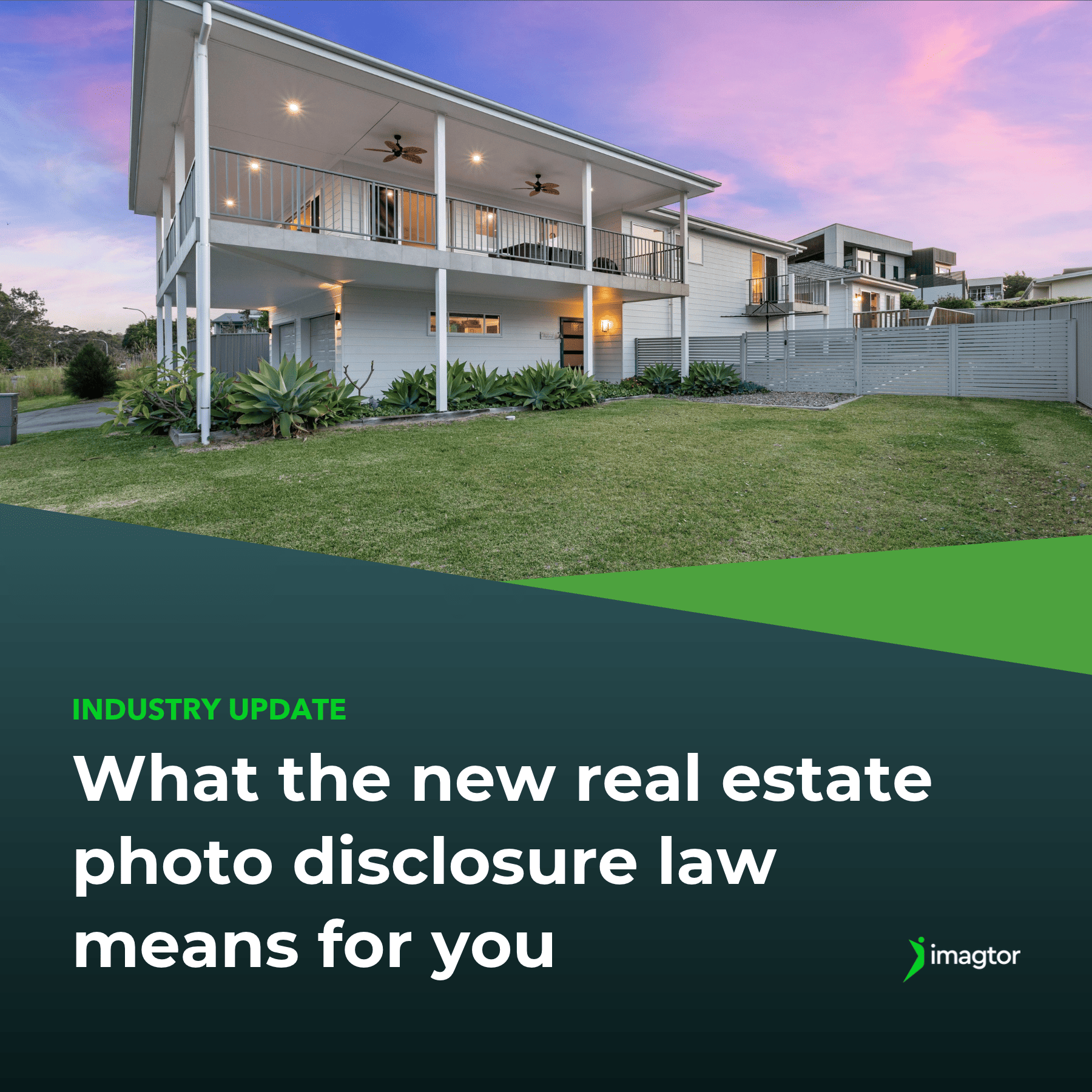
Real estate photo disclosure is no longer something photographers can ignore. California’s AB 723 took effect January 1, 2026, making it the first law in the US requiring agents and photographers to disclose when listing images have been digitally altered. More states are moving in the same direction, and the rules are changing how edited photos get delivered, labeled, and stored.
This guide breaks down what the law actually requires, which edits trigger disclosure, and what photographers need to adjust in their workflow right now.
What is California AB 723?
California AB 723 is the first state law in the US requiring disclosure of digitally altered real estate listing images.
Governor Newsom signed it on October 10, 2025. It took effect January 1, 2026, and adds Section 10140.8 to the California Business and Professions Code. The law covers brokers, agents, developers, and anyone acting on their behalf, which includes photographers delivering edited images for listing use.
What it requires:
- A clear, reasonably conspicuous disclosure on any altered image
- Buyer access to the original unaltered version via link, URL, or QR code
- Disclosure wherever the altered image appears before an offer is made
Willful violations are criminal misdemeanors. Penalties include fines up to $1,000, DRE administrative fines up to $2,500 per citation, and potential license suspension or revocation.
What counts as a digitally altered image under AB 723
This is where most photographers get confused. AB 723 separates standard photo enhancements from material alterations that change how a buyer perceives the property.
| Edit type | Disclosure required? |
|---|---|
| White balance correction | No |
| Exposure adjustment | No |
| Sharpening and resizing | No |
| Perspective correction | No |
| HDR blending | No |
| Virtual staging (adding furniture) | Yes |
| Object removal (clutter, cords, bins) | Yes |
| Grass greening or landscaping changes | Yes |
| Sky replacement | Yes |
| Adding fireplace effects or pool water | Yes |
| Removing architectural imperfections | Yes |
| Window pull compositing | Gray area, depends on MLS |
The short version: edits that change what the property actually looks like in real life require disclosure. Edits that improve how the camera captured what was already there generally do not.
How CRMLS Rule 11.5.2 extends the reach of AB 723
CRMLS, the California Regional MLS and the largest MLS in the US with over 110,000 members, aligned Rule 11.5.2 with AB 723 effective January 1, 2026.
Non-compliance triggers both MLS-level penalties and state-level criminal consequences at the same time. That means an agent who uses a virtually staged photo without disclosure is not just risking an MLS fine. They are risking their license.
For photographers, this matters because agents under this kind of pressure will push disclosure responsibility back onto their service providers. If your deliverables are not clearly labeled, expect questions.
Which states are following California’s lead
California is the first but not the last. Real estate photo disclosure legislation is spreading fast.
- New York state assembly and senate are considering bills A11365 and S9584 requiring disclosure of AI-altered images and media
- Washington DC introduced the Restricting Editing and Alterations in Listing Photos Amendment Act on October 16, 2026, requiring unedited versions and a written list of material differences
- Colorado SB 26-189, signed May 14, 2026, pushes broader AI disclosure requirements effective January 1, 2027
- Colorado, Connecticut, and Virginia have passed AI-related consumer protection laws that touch on disclosure
- NAR Articles 2 and 12 already prohibit deceptive advertising nationwide, meaning the underlying obligation exists in every market regardless of state law
California defined the expected behavior. Other states are following, formally or informally.
What this means for real estate photographers specifically
Most coverage of AB 723 focuses on agents. Photographers are not directly named in the law, but they still feel the impact directly.
Agents rely on photographer deliverables to build their listings. If an edited image triggers a disclosure requirement and the agent had no idea, that creates friction, revision requests, and in some cases liability questions.

Here is what is changing for photographers working with California agents:
- Agents are starting to request two sets of deliverables: the edited gallery and the original unaltered shots
- Knowing which edits you applied, and communicating that clearly at delivery, is becoming part of the job
- Object removal and virtual staging need a flag at delivery, not left for agents to figure out on their own
- Some agents will ask you to add disclosure labels directly to altered images before they go to the MLS
Photographers who make compliance easy for their agent clients build stronger relationships. Those who do not will start losing jobs to photographers who do.
How to adjust your editing workflow for compliance
Compliance does not require a complete overhaul. A few changes to how you organize and deliver work cover most of what is needed.
- Keep originals accessible. Store RAW files or unedited JPEGs alongside edited galleries so agents can provide buyer access when required
- Separate enhancement from alteration. At delivery, note which edits are standard corrections and which are material alterations like staging, object removal, or sky replacement
- Add a simple edit summary. A short note at delivery listing what changed is something agents genuinely appreciate and increasingly need
- Discuss expectations before the shoot. If working with California agents, knowing upfront what alterations they want lets you flag disclosure requirements before images go to the MLS
- Label altered images clearly. Some MLS platforms now have built-in labeling tools. Others require the disclosure embedded in the image itself
None of this takes long. Most of it is just communication that should already be part of a professional delivery process.
How outsourced editing fits into real estate photo disclosure
When you outsource editing, you need to know exactly what your editing partner changed. That is not a nice-to-have anymore. It is a practical compliance requirement.
Questions worth asking any editing service:
- Do you document what alterations you made to each image?
- Can you deliver originals and edited versions separately?
- Do you flag material alterations like object removal or virtual staging at delivery?
- Can you add disclosure labels to altered images if needed?
A transparent editing partner makes compliance significantly easier. One that cannot tell you what changed in each image creates a problem for both the photographer and the agent downstream.
At Imagtor, we work with photographers on both standard real estate photo editing and material alterations including virtual staging and object removal. We deliver edited and original versions separately and clearly note what changed in each gallery.
Note: this blog is for informational purposes only. For legal advice specific to your situation, consult a qualified real estate attorney.
Frequently asked questions about real estate photo disclosure
Does AB 723 apply to all real estate photos or just AI-edited ones?
AB 723 covers any digitally altered image that materially changes how a property appears, whether you made the alteration using AI tools or traditional editing software. The tool does not matter. The material change does.
Do agents need to show the original photo alongside every edited listing photo?
Yes, for images that require disclosure under AB 723. Buyers must have access to the original unaltered version via a link, URL, or QR code wherever the altered image appears.
Does perspective correction count as a material alteration under AB 723?
Generally no. Perspective correction fixes how the camera captured the scene rather than changing what the property actually looks like. That said, MLS rules may vary and it is worth confirming with your local MLS.
What happens if a real estate agent does not disclose a digitally altered photo?
Willful violations of AB 723 are criminal misdemeanors in California. Penalties include fines up to $1,000, DRE administrative fines up to $2,500 per citation, and potential license suspension or revocation. Non-compliance with CRMLS Rule 11.5.2 adds MLS-level consequences on top of that.
Real estate photo disclosure is coming to every market
Real estate photo disclosure rules are already law in California and spreading fast in New York, DC, and Colorado. Washington DC introduced a bill just three days ago. Colorado’s broader AI disclosure law kicks in January 2027.
For photographers, the practical impact is not about stopping edits. It is about being clear on what changed, keeping originals accessible, and making compliance easy for the agents who rely on your work. Build this into your delivery process now and you will be the photographer your clients trust when these rules reach your market.
Spend less time worrying about compliance and more time shooting. Imagtor helps real estate photographers deliver professional photo editing with clear communication on what changed and fast turnaround on every job.
Start today with a FREE TRIAL and get a 10% BULK DISCOUNT on your first order.

Real estate photo editing pricing varies more than most photographers expect. Knowing what different services actually cost in 2026, and what drives those costs up or down, helps you make smarter decisions about your editing workflow and whether outsourcing makes financial sense. This guide breaks down current pricing by service type, explains what you actually …
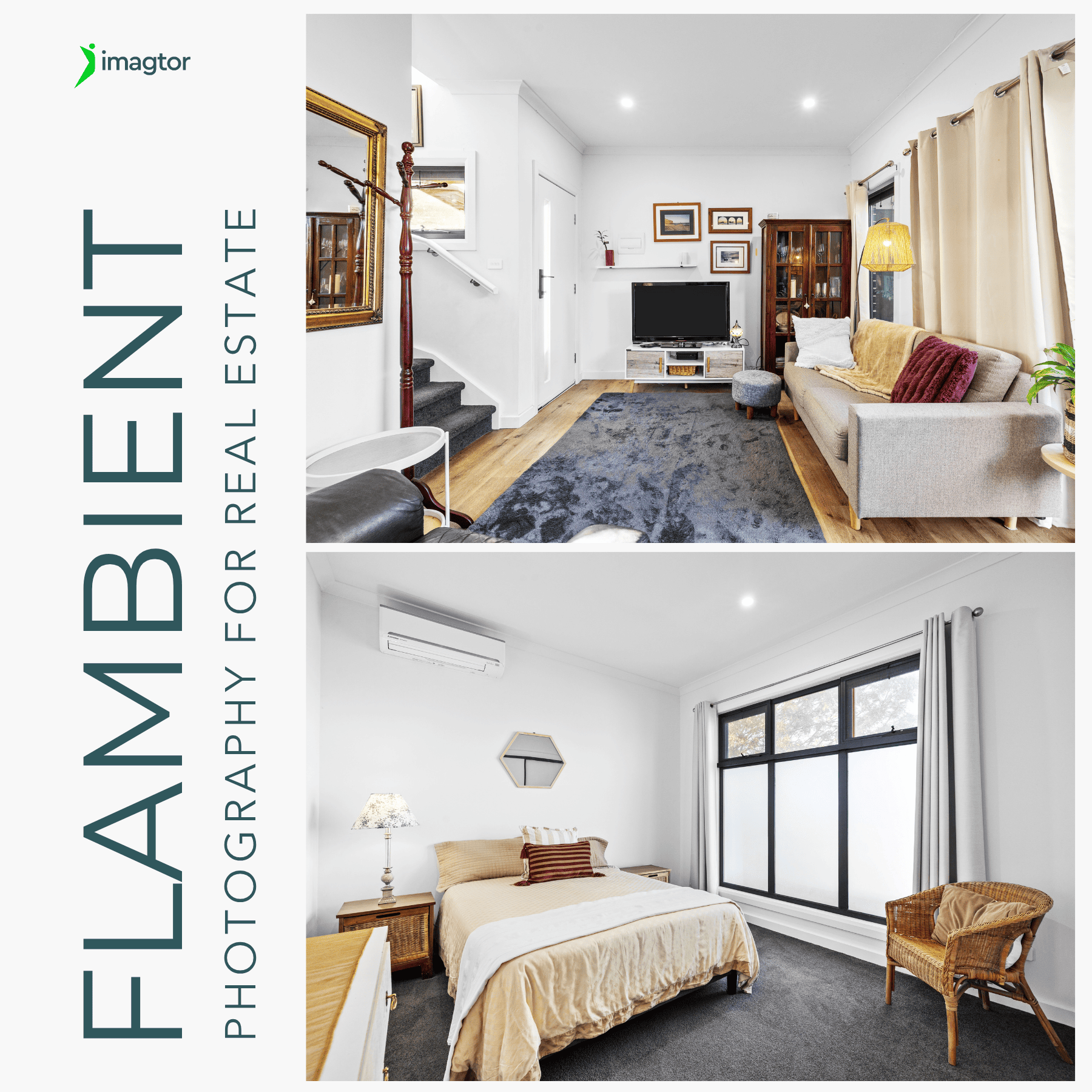
Flambient photography has become the go-to lighting technique for serious real estate photographers in 2026. It combines the natural light range of HDR with the color accuracy of flash, producing interior images that look clean, warm, and genuinely believable without the over-processed look that heavy HDR editing creates. This guide covers what flambient photography actually …