
HDR and Flash together: Getting the best of both worlds

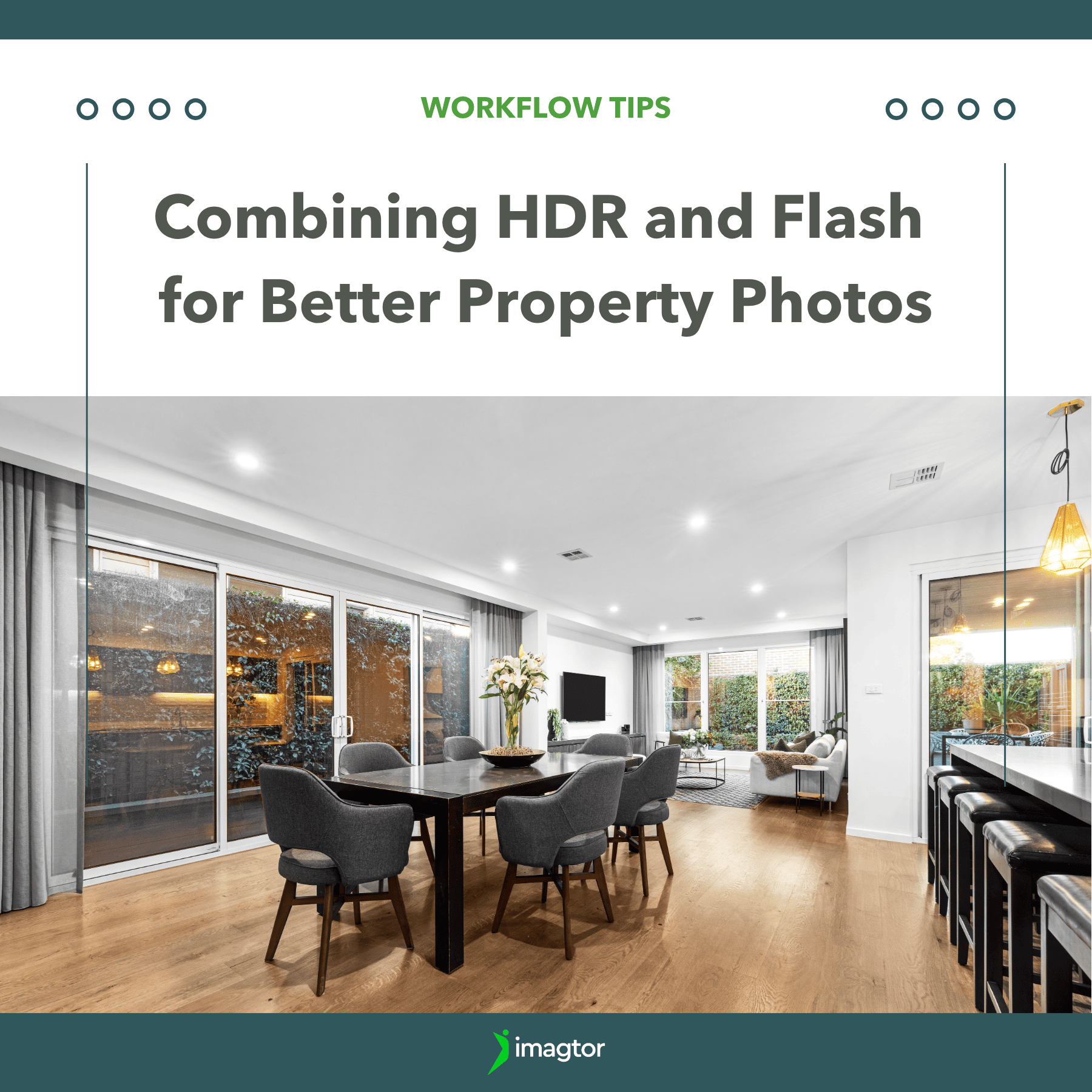
Many photographers think they have to choose between HDR or flash. In reality, using HDR and flash together can give you cleaner images, better color, and more control over the final result. For many real estate photographers, combining both techniques has become a core part of a reliable workflow.
Why photographers combine HDR and flash
Every shooting method has its strengths.
HDR captures a wide range of light, especially in rooms with bright windows and dark corners. Flash helps produce cleaner colors and more even lighting. Instead of picking one over the other, many photographers combine HDR and flash to get the benefits of both without the drawbacks of either.
This approach is called Flambient photography, where bracketed ambient exposures are blended with one or more flash frames during editing. The goal is not to make workflow more complicated. It is to solve lighting problems while keeping the final image looking natural.
Building a balanced shooting workflow
A successful HDR and flash workflow starts before you press the shutter.
Most photographers begin by capturing at least three bracketed ambient exposures to build the HDR base. First is the base image, followed by one at a lower f-stop and one at a higher f-stop.
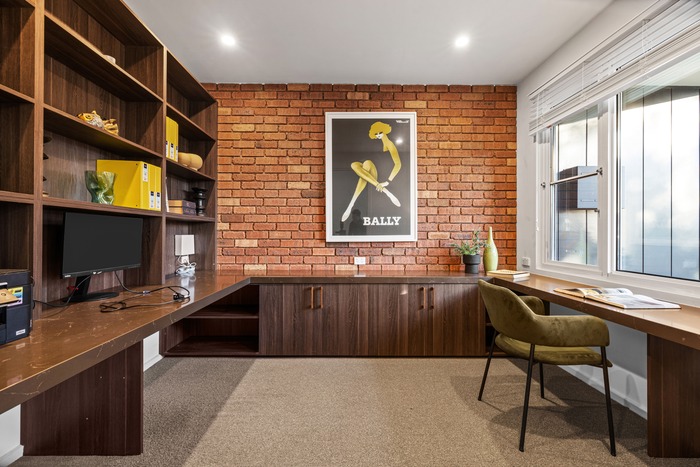
Next, one or more flash frames are captured. It helps to separate flash from the camera and point it toward the ceiling to get a natural spread of light. Aiming at a white surface gives you cleaner, more neutral colors to work with during blending.
For rooms with large windows, a separate window pull exposure is also captured to preserve outdoor view with detail.
Every photographer builds a slightly different workflow, but the principle stays the same: capture enough information during the shoot so editing becomes easier later.
What HDR contributes to the final image
HDR is one of the most practical techniques in real estate photography because it records detail across both bright and dark areas of a scene in a single set of captures.
When done well, HDR produces images that feel naturally bright without losing window detail or crushing shadows in darker corners. It works particularly well for:
- Rooms with large windows or floor-to-ceiling glass
- Open-plan living areas with mixed light sources
- High-ceiling spaces where light falls unevenly
- Rooms with strong natural light that is hard to balance in a single exposure
Because HDR uses multiple bracketed exposures, photographers have more flexibility when balancing the final image in post.
What flash adds that HDR alone cannot
While HDR captures light, flash gives you more control over it.
The biggest advantage of flash is color accuracy. By overpowering ambient light in the room, flash eliminates almost all color casts. You can then blend in the ambient layer to taste during editing to give the image a more natural feel.
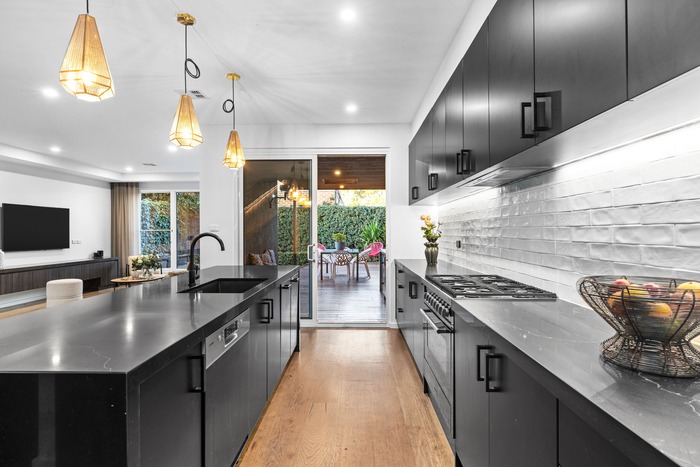
Flash also creates cleaner shadows and helps surfaces look sharper and more defined. Unlike standard HDR, which can sometimes look crunchy or unrealistic, the Flambient approach offers superior control and avoids the common problem of orange color casts from lamps.
Flash is especially useful in kitchens, bathrooms, and luxury interiors where color accuracy and crisp detail matter most. That said, many photographers do not use flash in every room. They add it only where it makes a visible difference, which keeps the workflow efficient without sacrificing quality.
When combining HDR and flash works best
Some properties benefit more from a combined HDR and flash workflow than others.
Luxury homes are the clearest example. Expensive finishes, large windows, and layered lighting all benefit from the extra control that Flambient shooting provides.
Homes with mixed lighting are another strong case. When natural daylight, ceiling lights, and decorative lamps are all present in the same room, each source produces a different color temperature. Flash helps bring these together into a balanced, consistent result.
The same applies to kitchens with reflective cabinetry, bathrooms with mirrors and glass, and living rooms with floor-to-ceiling windows. In these spaces, using both HDR and flash gives you significantly more options when editing.
>> Read more: HDR vs Flambient For Real Estate Photography
Common mistakes when mixing HDR and flash
Combining different exposures creates more opportunities for things to go wrong. These are the most common issues to watch for:
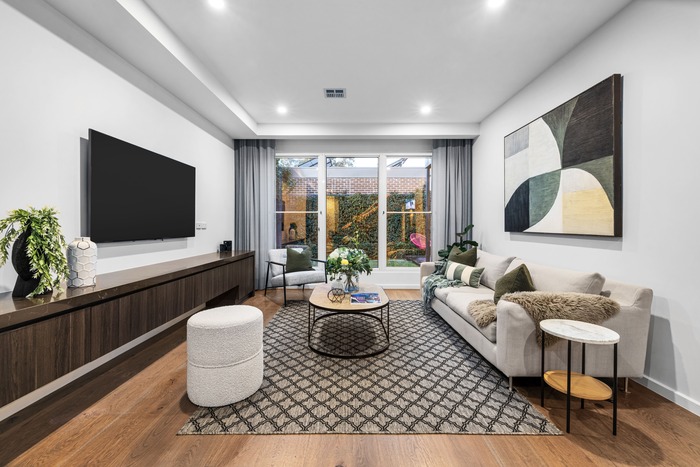
- Too much flash power. When flash becomes the dominant light source, the room loses its natural atmosphere and starts looking artificial. Flash should fill and correct, not overpower.
- Inconsistent white balance. If color temperature between ambient exposures and flash frame does not match, blending becomes much harder and the result looks patchy.
- Reflections in mirrors and glass. Flash creates bright hotspots on reflective surfaces that require extra work to remove in editing. Check for these before shooting.
- Shooting too many unnecessary frames. More exposures do not always mean better results. A well-planned workflow is faster and cleaner to edit than one with dozens of nearly identical images.
- Uneven flash placement. For large interiors, placing two or three flashes in corners helps avoid deep shadows and achieves a more even, homogeneous light feel.
Editing HDR and flash images effectively
Shooting is only half of the process. The real work happens in editing.
In editing, the ambient layer sits on top of flash shot with blending mode set to Luminosity. This combines the two exposures while keeping color from flash and natural light gradients from the ambient frame. Setting opacity to around 50% for both layers gives an even balance between the two light sources.
The goal is not simply to merge exposures. It is to blend them so the final image looks like a naturally well-lit room. Window views should look believable, shadows should remain soft, and colors should feel consistent across the full gallery. If the editing is immediately obvious to the viewer, something has been pushed too far.
Creating a workflow that fits your style
Not every photographer works the same way, and that is fine.
Some prefer a fast HDR-only approach for high-volume residential work. Others rely more heavily on flash for premium properties. Many switch between methods depending on what the property needs.
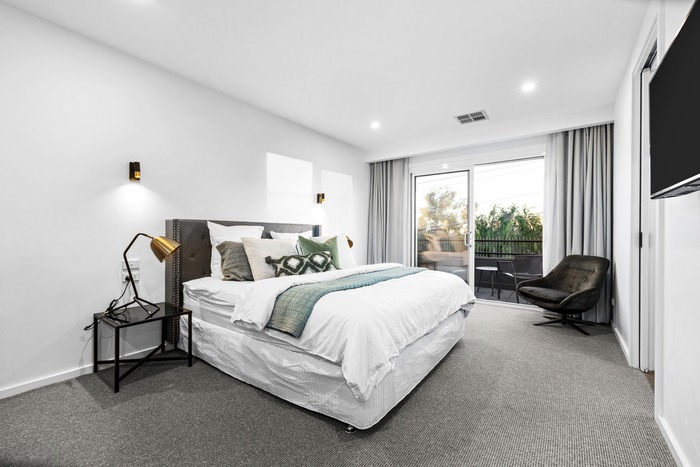
Combining HDR and flash does not mean every room needs multiple flash frames or complex editing. Sometimes a single well-placed flash exposure is enough to lift the result noticeably. The best workflow is the one that helps you deliver consistent images while staying efficient on site and in post.
Bringing HDR and flash together with professional editing
A strong HDR and flash workflow does not end when the camera is packed away. Professional editing is what brings all those exposures together into one polished image.
At Imagtor, our editors work with HDR, flash, and Flambient workflows every day. We blend exposures, balance colors, and keep window views looking natural without making images feel overprocessed.
Whether you shoot HDR, flash, or a combination of both, Imagtor helps you turn multiple exposures into polished property photos with professional editing and consistent quality.
Start today with a FREE TRIAL and get a 10% BULK DISCOUNT on your first order.
Real estate video editing for Reels and Shorts follows different rules from a standard listing walkthrough. Pacing, format, and visual clarity all need to match how people actually watch on mobile. This guide covers what makes short-form property videos work on Instagram, YouTube, Tiktok and Facebook. Why Reels and Shorts work differently from listing videos …

Slow photography workflow does not always come from editing. Time gets lost before the shoot, during file organization, and at delivery too. Fixing each of those stages is what actually moves the needle. Where your photography workflow is losing time Before fixing your photography workflow, find out where the time is actually going. Most photographers …